


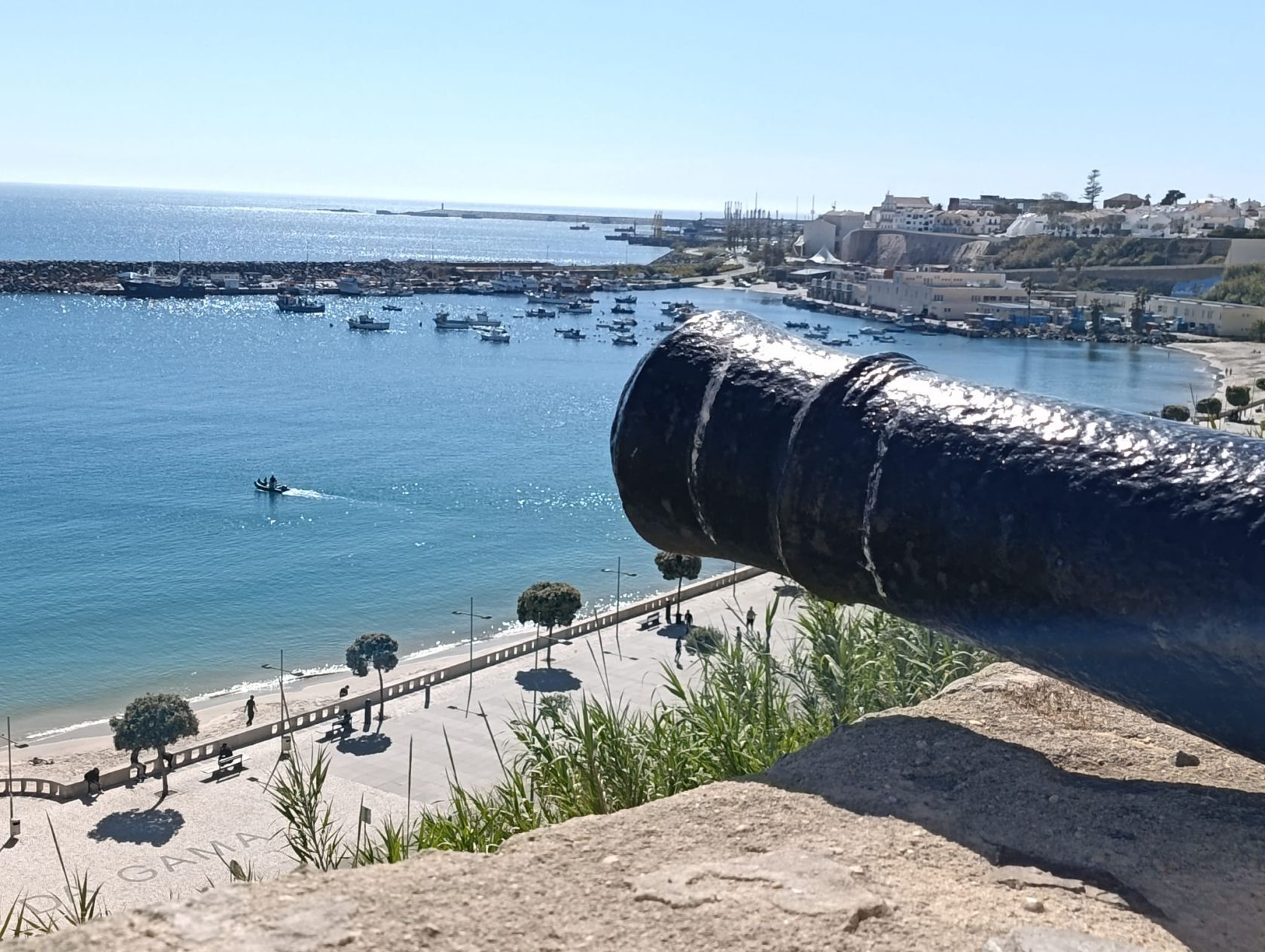
The Costa Vicentina, which runs from north of Sines to the southern Algarve, is a wild coastline where beaches are more than just places to swim. They are gateways to nature. Here, the tides set the pace, afternoons glow orange, and there is no need to rush.
Travelling this coast is an invitation to discover new places, starting in the historic city of Sines and heading south. Along the way, you’ll find long sandy beaches, hidden coves, delicious seafood, and a lively culture that comes alive with world music. If you want to know the best places to relax and swim in clear water, here is our guide to the five must-see beaches of the Costa Vicentina.
1. São Torpes Beach (Sines)
We start in Sines at the well-known São Torpes Beach. This beach is famous for its unusually warm water, thanks to the old power plant’s cooling system. With its long stretch of sand and steady waves, São Torpes is a favorite spot for surfers and bodyboarders in the area.
Getting to the beach is easy, thanks to the coastal road from Sines to Porto Covo. There are several free parking lots along the way, which are helpful for families or anyone carrying a lot of gear.
São Torpes has plenty of amenities, including lifeguards in summer, surf schools for lessons or rentals, and several popular beach bars and restaurants. Local favourites include amêijoas à Bulhão Pato (clams in garlic and cilantro sauce), whelk stew (feijoada de búzios), and charcoal-grilled fish from the Vicentine coast. If you visit in late July, São Torpes is a popular daytime spot for campers and festival-goers attending FMM Sines (Festival das Músicas do Mundo), the country’s biggest roots music festival, which turns Sines Castle and the beach promenade into a lively, multicultural venue.
2. Praia Grande de Porto Covo (Sines)
A few kilometres south in Sines, you’ll find the charming village of Porto Covo, made famous in Portuguese music and known for one of the Alentejo coast’s most beautiful beaches.
Praia Grande de Porto Covo sits below cliffs, protected by large rocks that block the north wind and surrounded by soft, golden sand. The water is crystal clear, shining in shades from emerald green to turquoise, and perfect for a swim.
You can reach the beach by wooden stairs from the top of the cliffs.
There is public parking at the top, but it fills up quickly in summer because it’s close to the village centre. Praia Grande is an urban beach with Blue Flag status, offering changing rooms, showers, sunshade rentals, and lifeguards.
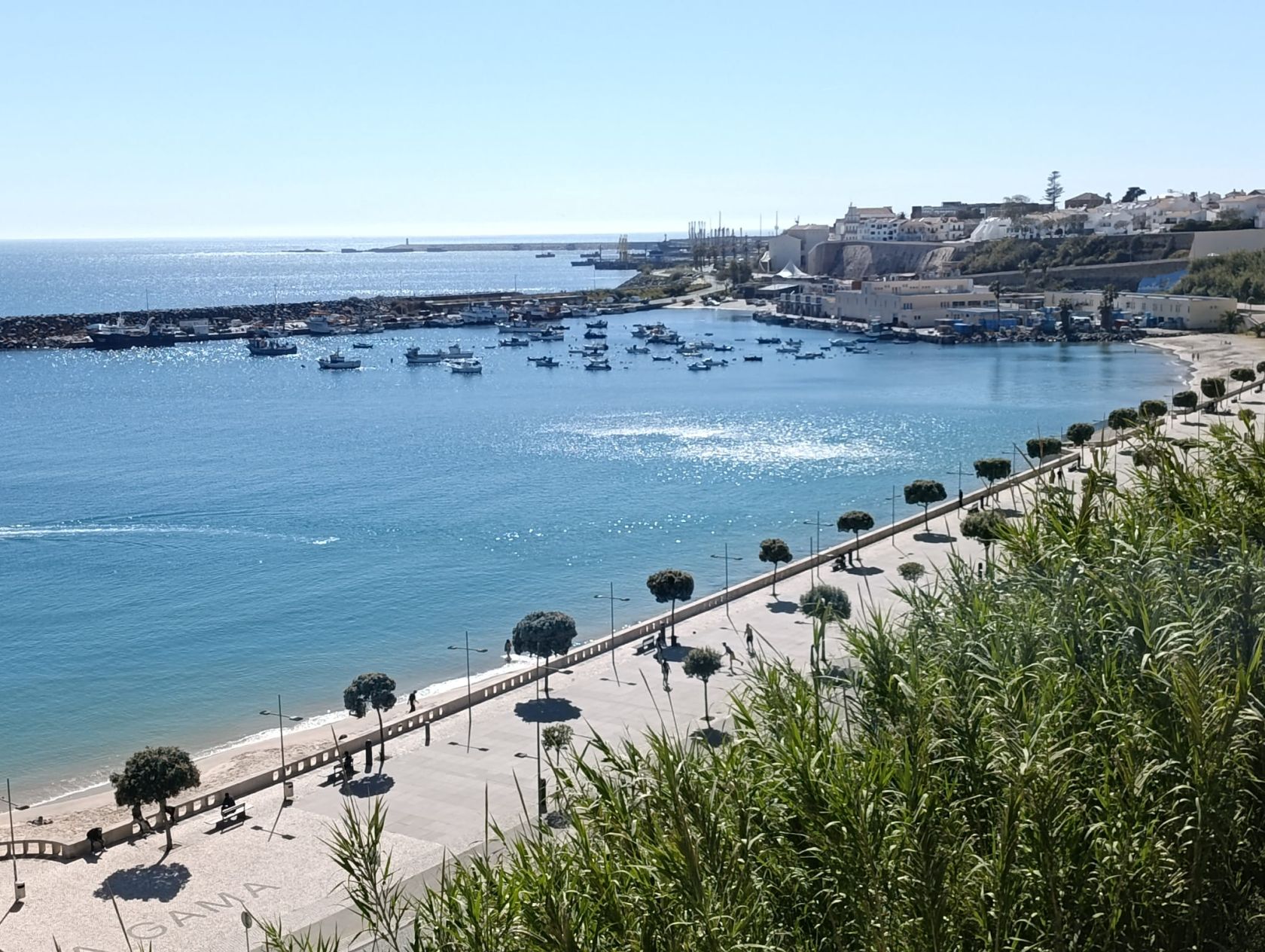
One of its best features is being just a short walk from Porto Covo’s centre, where you’ll find many great places to eat. On Rua Vasco da Gama, you can try seafood rice, shrimp açorda (bread stew), or fried cuttlefish.
Besides swimming and exploring the rocks for marine life, the beach is part of the Rota Vicentina hiking network and is a popular stop for those walking the Fisherman’s Trail. During the FMM Sines festival, Porto Covo hosts the opening days, filling Largo Marquês de Pombal with music from around the world.
3. Malhão Beach (Vila Nova de Milfontes, Odemira)
Continuing down the coast, we enter the municipality of Odemira to discover Malhão Beach, a true monument to wild nature. Malhão is not merely a beach but a vast system of continuous sands and protected dunes.
As we continue south, we reach Malhão Beach in Odemira, a place that truly shows off wild nature. Malhão is more than just a beach; it is a wide area of sand and protected dunes that seem to go on forever. There are no buildings or urban development here, just open sea, dune plants, and dark cliffs.
The strong waves and natural beauty attract both surfers and naturists, especially in the quieter northern areas. Space for hundreds of vehicles. As it is a strictly wild beach, amenities are limited: there are no permanent beach bars or restaurants on the sand, so bringing a cooler with food and water for the day is essential.
However, the main area is supervised by lifeguards during the summer, and wooden walkways protect the dune ecosystem.
For lunch or dinner, visitors head to nearby Vila Nova de Milfontes, where renowned restaurants serve fresh seafood, percebes (goose barnacles), and cuttlefish stew (feijoada de choco). Activities at Malhão range from simply taking in the scenery and going on photography walks along the cliffs to enjoying the excellent surfing provided by its sandbanks.
4. Carvalhal Beach (Zambujeira do Mar, Odemira)
Further south, hidden in a deep valley between Aljezur and Zambujeira do Mar, is Carvalhal Beach.
This is one of the most inviting places on the Vicentine Coast, where a freshwater stream runs through the valley and meets the sea, creating a special landscape.
High cliffs on both sides protect the beach from strong winds, and the shell-shaped sand and calm waters near the shore make it a top pick for families with kids.
You can reach the beach via a paved road that winds down the valley and ends at a flat parking lot near the sand, making it easy for people with strollers or limited mobility. The beach has great facilities, like modern restrooms, freshwater showers, and sunbed rentals.
Right on the sand, there’s a popular restaurant known for grilled fish, octopus salads, and local snacks that taste even better with your feet in the sand. At low tide, natural pools form among the rocks in the south, perfect for kids to play.
Hikers can take trails up the cliffs that lead straight to Zambujeira do Mar, offering amazing ocean views.
5. Amoreira Beach (Aljezur)
Our last stop is Amoreira Beach in Aljezur, right in the heart of the Vicentine Algarve. This is one of Portugal’s most impressive beaches because it includes the mouth of the Aljezur Stream.
On one side, you have the open sea and Atlantic waves for surfers. On the other, the river forms a calm, warm lagoon that’s great for swimming and safe for kids. The valley is surrounded by big dunes and black schist slopes that stand out against the white sand. Lifeguard services and surf schools.
A highly regarded restaurant sits atop the northern cliff, offering lunch with a breathtaking panoramic view of the river meeting the sea; menu highlights include authentic sea bass, papas de sargo (a traditional fish-and-cornmeal porridge), and desserts made with Aljezur sweet potatoes. Activities at Amoreira abound: you can surf the ocean waves, go stand-up paddleboarding (SUP) or canoeing in the calm river waters, and explore the vast dunes on foot.
At low tide, the receding water reveals a multitude of small pools and sandbars, making every visit a completely new experience.
The Spirit of July That Lingers by the Sea
Exploring the beaches of the Costa Vicentina, from the lively city of Sines to the natural beauty of Aljezur, is much more than a typical summer trip.
It’s a chance to connect with a region that has worked hard to protect its land, choosing to avoid mass tourism and keep its greatest treasures: clean waters, stunning scenery, and genuine local culture.
As you plan your trip south, try to match your pace with nature. Stay after sunset, enjoy an FMM concert with an open mind, taste the local seaside food, and appreciate the chance to walk along a coastline that is still free, wild, and beautiful.








 English
 Nederlands
 Deutsch
 Français
 Español
 Italiano
 Svenska
 Pусский
 中文
中文 Türkçe
 Português
 Polski
 عربي
عربي Suomi
Suomi עִברִית
 Português (Brasil)
Follow us on social media