

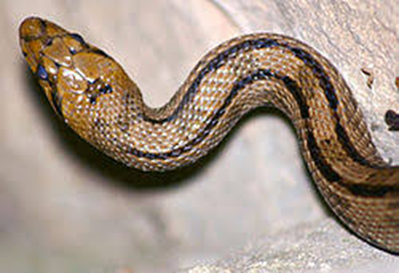
Snakes have been quite conspicuous over the summer, and one of Portugal’s most common snakes, the Ladder Snake, breeds during May and June, laying a clutch of 4 to 24 eggs 3–6 weeks after mating. Incubation takes between 5 and 12 weeks, so the hatchlings are probably teenagers by now, and already lurking out and about. They can live for up to 20 years, and amazingly, are only reproductively mature after 5 years.
They can move fast if the mood takes them, just wriggling along on their bellies, and tasting the air with their tongues flicking out. The Ladder Snake is easily recognized by its distinctive ‘ladder’ pattern. This pattern consists of dark, ladder-like ‘rungs’ along the back, but as the snake matures, the ladder pattern often fades, replaced by two dark, long stripes along the body. The belly is pale, sometimes with dark spots. They typically reach lengths between 100 cm and 160 cm.
‘Cobra’ in Portuguese means ‘snake’
Snakes always get a bad rap, especially when they are collectively called ‘cobra’ in the Portuguese language! There are around ten species of snakes here, and two venomous ones - both being vipers, Seoane's Viper and the Lastaste Viper being the ones to avoid, but they are shy and avoid human contact, so bites are rare. Most snake bites are caused by people trying to catch and handle them as opposed to being stalked or hunted by them, but having said that, it would be wise to keep away from the business end of any snake, and seek medical attention after a bite, whether the victim be human or a pet!
They are all carnivores, and their diet depends on the species. Some eat warm-blooded prey such as rodents, birds or rabbits, while others eat insects, frogs, eggs, other reptiles, fish, earthworms, or slugs. They also eat snails, and to extract their escargot, the snakes push their lower jaws into the shell and grasp the flesh with their curved teeth. In my humble opinion, they are welcome to as many as they can find.
Largest and heaviest
The largest snake in the world depends on whether you are looking at length or weight. The reticulated python (Malayopython reticulatus) is the longest snake in the world, regularly reaching over 6.25 meters in length, and the longest ever recorded was found in 1912 and measured a staggering 10 meters. Green anacondas are the heaviest snakes in the world, the heaviest ever recorded being 227 kilograms (yikes!) and was 8.43 meters long, with a girth of 1.11 meters.
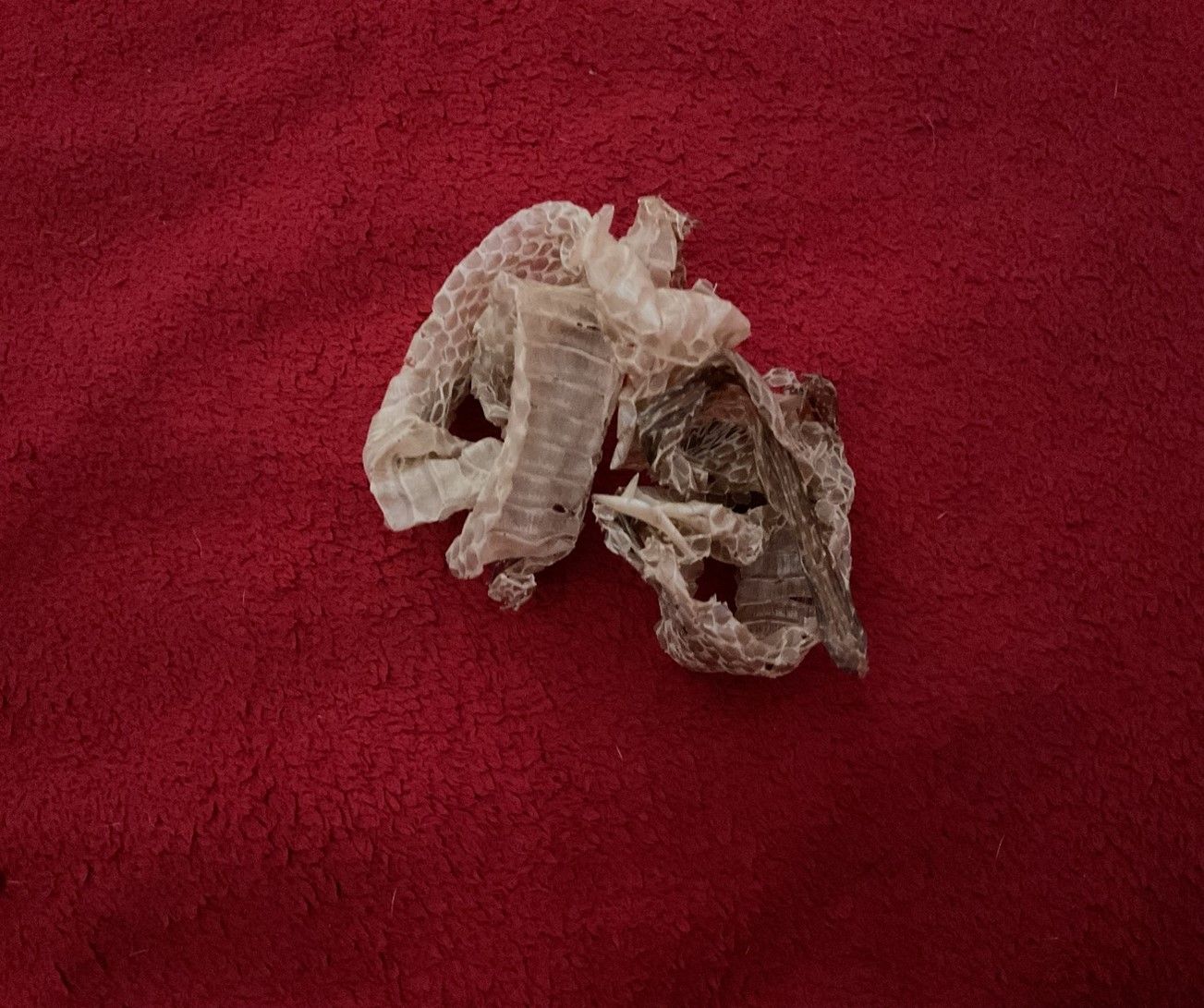
As snakes grow, their skin does not, so they outgrow it and shed their outer layer of skin. Shedding can happen as often as once a month, although it's usually only a handful of times a year at most.








 English
 Nederlands
 Deutsch
 Français
 Español
 Italiano
 Svenska
 Pусский
 中文
中文 Türkçe
 Português
 Polski
 عربي
عربي Suomi
Suomi עִברִית
 Português (Brasil)
Thanks! Great article! I happen to love snakes. Here in the Algarve are plenty of rat snakes, and we all love how they prey on rodents (except the rodents).
I have lived in Texas in a past life, and in South Texas, while crawling amongst mesquite trees (don’t ask why, but a clue is it was in the sixties, and I was into special journeys seeking alternative consciousness and awareness), I came nose to nose with a western diamondback rattlesnake, coiled with it’s tongue darting out, almost touching my face! I froze, as did it. It was sort of like the staring contests we play as kids. It was quite uncomfortable as mesquite trees are thorny, and my elbows were resting on some of them. It seemed like an hour, but about five minutes went by when the rattler slowly uncoiled and slithered away.
Luckily, as the author states, there are only a couple of venomous snakes in Portugal, and according to a representative of the state conservation agency I met on a trail, their venom is not strong enough to kill a human (although an allergic reaction might be deadly, or heart attack). Also, they inhabit more rural, mountainous areas where most of us do not frequent.
My experience described above is typical of all snakes. They are not interested in us (well, maybe an anaconda would be), and do not want to bite us. The venomous ones try to conserve their venom for use against their prey. If we leave them alone, or freeze when we happen upon them, they will slither away to search for the prey they are really interested in.
By JoeT from Algarve on 13 Sep 2025, 13:07