

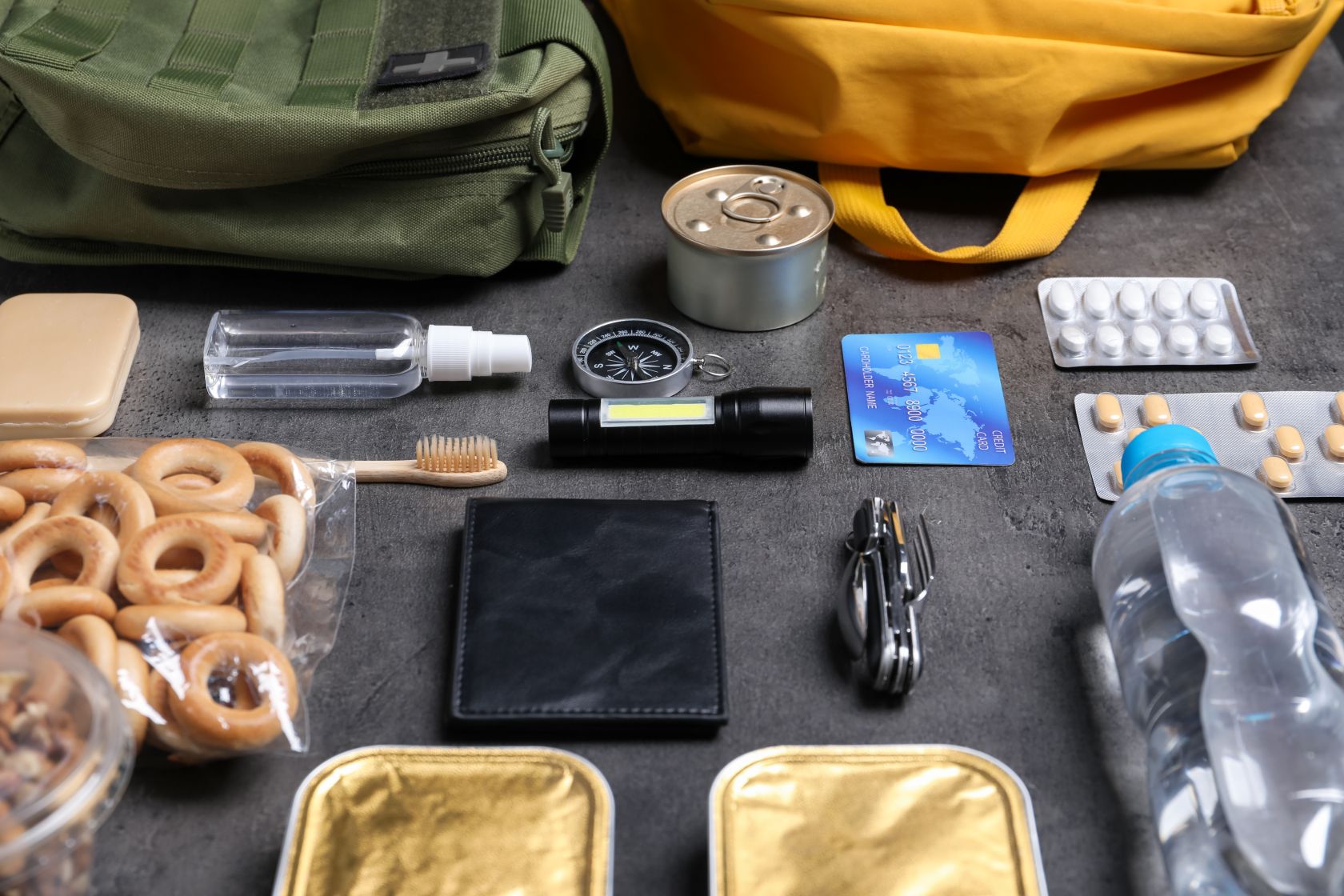
The recommendation is to assemble an emergency kit that can sustain a household for at least 72 hours.
The goal is straightforward: ensure that every family has enough essential supplies to cope with potential interruptions in electricity, water, communications, or limited access to goods and immediate assistance—situations that can occur during storms, floods, landslides, or other severe weather events.
What to Include in the Emergency Kit
According to official guidelines, the kit should be prepared in advance and kept in an easily accessible location, containing items to meet basic needs for food, health, communication, and protection.
Essential items include:
- Drinking water and non-perishable food for three days
- First aid kit, including regularly used essential medications
- Means of lighting and communication, such as a flashlight, portable radio, spare batteries, and a power bank for charging mobile phones
- Weather-appropriate clothing, blankets, and sturdy footwear
- Copies of important documents stored in a waterproof bag
- Personal hygiene products, basic sanitation items, and garbage bags
- Other useful items, such as a whistle, a pocket knife, cash, and a local map
The purpose of assembling these supplies is to enable families to maintain basic safety and comfort while waiting for services to be restored or for emergency assistance to arrive.






 English
 Nederlands
 Deutsch
 Français
 Español
 Italiano
 Svenska
 Pусский
 中文
中文 Türkçe
 Português
 Polski
 عربي
عربي Suomi
Suomi עִברִית
 Português (Brasil)