


"Portuguese culture owes him his experimentation in words, in images, in publishing, but also in his resistance to dictatorship and in his daring not to submit to forms, in an unwavering artistic and ethical commitment," said the minister, in a statement sent to Lusa.
Fonseca also recalled that Lemos, who was born in Lisbon and studied at the António Arroio School, was initially part of the Portuguese surrealist movement.
"In 1952, before his exile in Brazil, because of his opposition to the Salazar dictatorship [in Portugal], participated in an exhibition that included works of his together with [those of] the artists Marcelino Vespeira and Fernando Azevedo, at the Casa Jalco,” the minister recalled. “In the same year he directed, with José-Augusto França, the Galeria de Março.
“He also participated in the exhibition ‘50 Independent Artists’ of the National Society of Fine Arts and, in 1961, in the Second Exhibition of Fine Arts of the Calouste Gulbenkian Foundation."
The minister stressed that, despite "a long and diverse artistic path in his approaches" to his work, it "never fitted into a single definition".
He himself, she recalled "said he was the sum of 'activities that have several names': photographer, painter, draughtsman, designer, but also writer, poet, thinker, in a permanent desire to try languages, techniques and expressions."
Fernando Lemos, who was born in Portugal, died a Brazilian national on Tuesday in a hospital unit in the city of São Paulo.
He belongs to the third generation of Portuguese modernists and his work was initially inspired by the Surrealist movement.
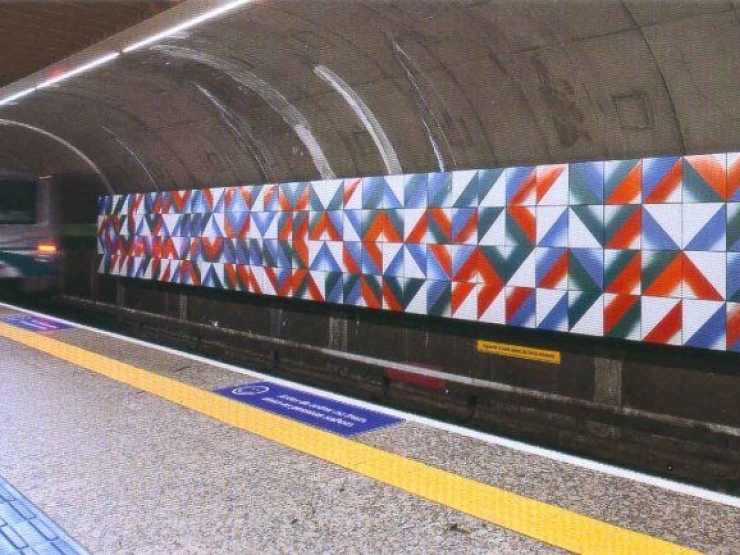
He leaves a vast legacy: paintings, drawings, poetry and also many works in the area of graphic and industrial design.






 English
 Nederlands
 Deutsch
 Français
 Español
 Italiano
 Svenska
 Pусский
 中文
中文 Türkçe
 Português
 Polski
 عربي
عربي Suomi
Suomi עִברִית
 Português (Brasil)