


According to the latest Dossier Cidade de Lisboa, foreign purchasers invested €465 million in homes within the capital’s Urban Renewal Area in the first half of 2025. Volumes dipped slightly, yet overall spending remained identical to last year. That paradox: fewer homes sold, same money invested, is one of the clearest signs of a market where buyers are becoming more selective, more informed and more focused.
With prices rising 15.9% year-on-year in the third quarter of 2025, the strongest increase since 2018, central Lisbon is becoming not only more exclusive but more polarised.
David Moura-George, Portugal General Manager from Athena Advisers notes:
“Five years ago, international clients were exploring properties for sale in Lisbon, now they’re arriving with a pre-defined map. They know the streets they want and the lifestyle they expect. The city isn’t an emerging discovery anymore; it’s a curated choice where global buyers are behaving with the same precision they would in Paris, London or New York.”
Who Is Buying? A Market Quietly Rebalanced
In the first half of the year, buyers from 52 nationalities were active in Lisbon’s Urban Renewal Area. A broad international footprint that contrasts with an increasingly concentrated distribution of capital.
Although international demand remains globally diverse, real purchasing power is increasingly consolidating around fewer nationalities. American buyers make up the majority, accounting for 24% of total foreign investment, driven by lifestyle migration, remote work flexibility and a search for stable European bases offering safety and quality of life. Brazilian and French buyers follow jointly in second place, with Brazilians representing 11% of international investment, often motivated by cultural affinity, family relocation and long-term security planning, while the French account for 10%, typically drawn by value comparisons with domestic markets and the appeal of a better work–life balance.
David Moura-George comments: “When we speak with clients from different countries, the motivations vary dramatically. Americans generally come looking for a calmer, safer, more liveable European base. Brazilians often seek cultural continuity and long-term stability. French buyers tend to prioritise quality of life combined with sound financial value. What’s fascinating is that Lisbon manages to meet all these needs simultaneously - and that versatility is rare in Europe.”
The Streets Everyone Wants: Inside Lisbon’s Global Property Sweet Spots
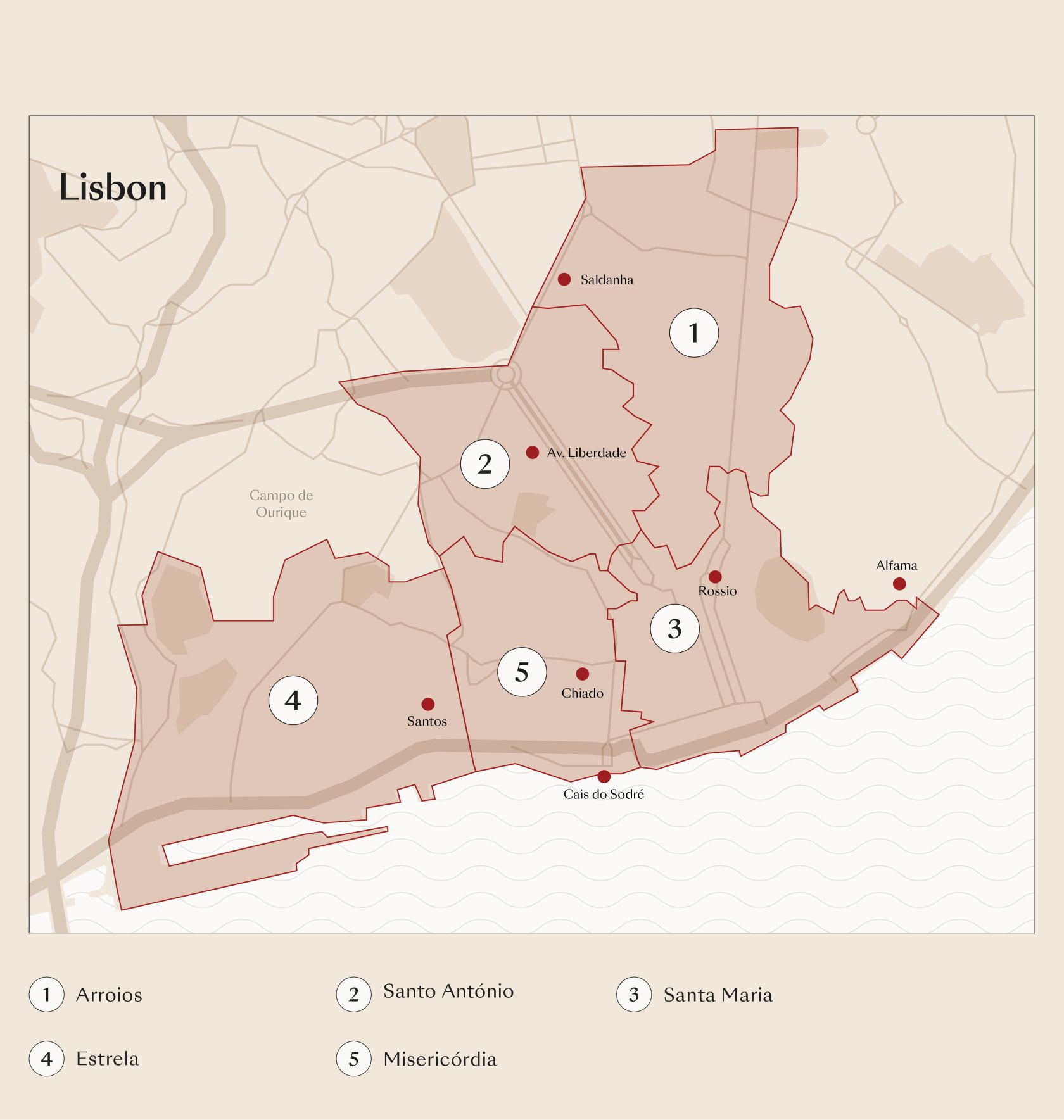
Foreign demand in Lisbon has become remarkably concentrated, gravitating towards a tight constellation of central neighbourhoods known for their architectural beauty, cultural vibrancy and premium renovation projects. These districts are not merely desirable, they embody the international image of Lisbon that resonates most strongly abroad.
Estrela remains one of the city’s most coveted addresses, offering a sought-after blend of elegance, tranquillity and authenticity. Property for sale in Estrela appeals to buyers seeking refined residential living without sacrificing charm or character.
Arroios, once eclectic and overlooked, has surged in appeal thanks to its creativity, diversity and up-and-coming atmosphere. International buyers, especially younger ones, see it as Lisbon’s version of a revitalised urban district - the kind of place where cafés, ateliers and small businesses shape the community’s rhythm.
Santo António holds its position at the very top of the market, with properties for sale on Avenida da Liberdade and in the surrounding area representing the highest end of the local market. With its combination of grand boulevards, designer boutiques and meticulously restored buildings, it is the natural habitat for global buyers accustomed to prime urban living.
Santa Maria Maior remains an undeniable draw despite regulatory volatility surrounding tourism and short-term rentals. Its historic layers, river views and cinematic setting hold a near-symbolic status, particularly among buyers who dream of living in Lisbon’s postcard heart.
Finally, Misericórdia - home to Chiado, Príncipe Real and Bairro Alto - continues to embody the essence of contemporary Lisbon. It merges culture, gastronomy, nightlife and beautifully renovated architecture with an effortless sophistication that few European neighbourhoods can replicate.
According to David Moura-George: “Foreign buyers aren’t merely participating in the market, they’re shaping it. They’re defining what prime Lisbon looks like, and increasingly, that definition extends beyond a single avenue. It’s now a collection of micro-districts, each with its own distinct personality and international following. That’s a sign of a city maturing into a truly global residential destination.”
Why These Areas? A Real-Estate Reading of the Trend
High levels of foreign investment are never random, and in Lisbon’s case, they reflect a very clear set of structural dynamics. The historic core offers something that no other part of the city can: a dense concentration of century-old facades, renovated buildings and architecturally protected streetscapes. These neighbourhoods are walkable, culturally rich and internationally recognisable, qualities that repeatedly top the priority list for global buyers seeking a European city lifestyle. They are also the areas most frequently portrayed in international travel and lifestyle media, which reinforces their desirability long before a buyer even sets foot in Lisbon.
Despite occasional volatility linked to tourism regulations or political shifts, these central districts have historically demonstrated sharper and faster resilience than any other part of the capital. This resilience helps explain why international buyers now account for 75% of residential investment in Santa Maria Maior, 69% in Santo António and 64% in Misericórdia.
This phenomenon is not simply a matter of price escalations. It is a question of identity, typology, lifestyle and long-term confidence in a city centre with global relevance.
As David Moura-George summarises:
“Lisbon isn’t overheating, it’s reorganising. What we’re witnessing is a city redefining the boundaries of its premium core. The centre has become a luxury product, shaped by global standards, while the wider metropolitan area is expanding its appeal to different buyer profiles. It’s a sign of a market becoming more sophisticated, not more fragile.”






 English
 Nederlands
 Deutsch
 Français
 Español
 Italiano
 Svenska
 Pусский
 中文
中文 Türkçe
 Português
 Polski
 عربي
عربي Suomi
Suomi עִברִית
 Português (Brasil)