

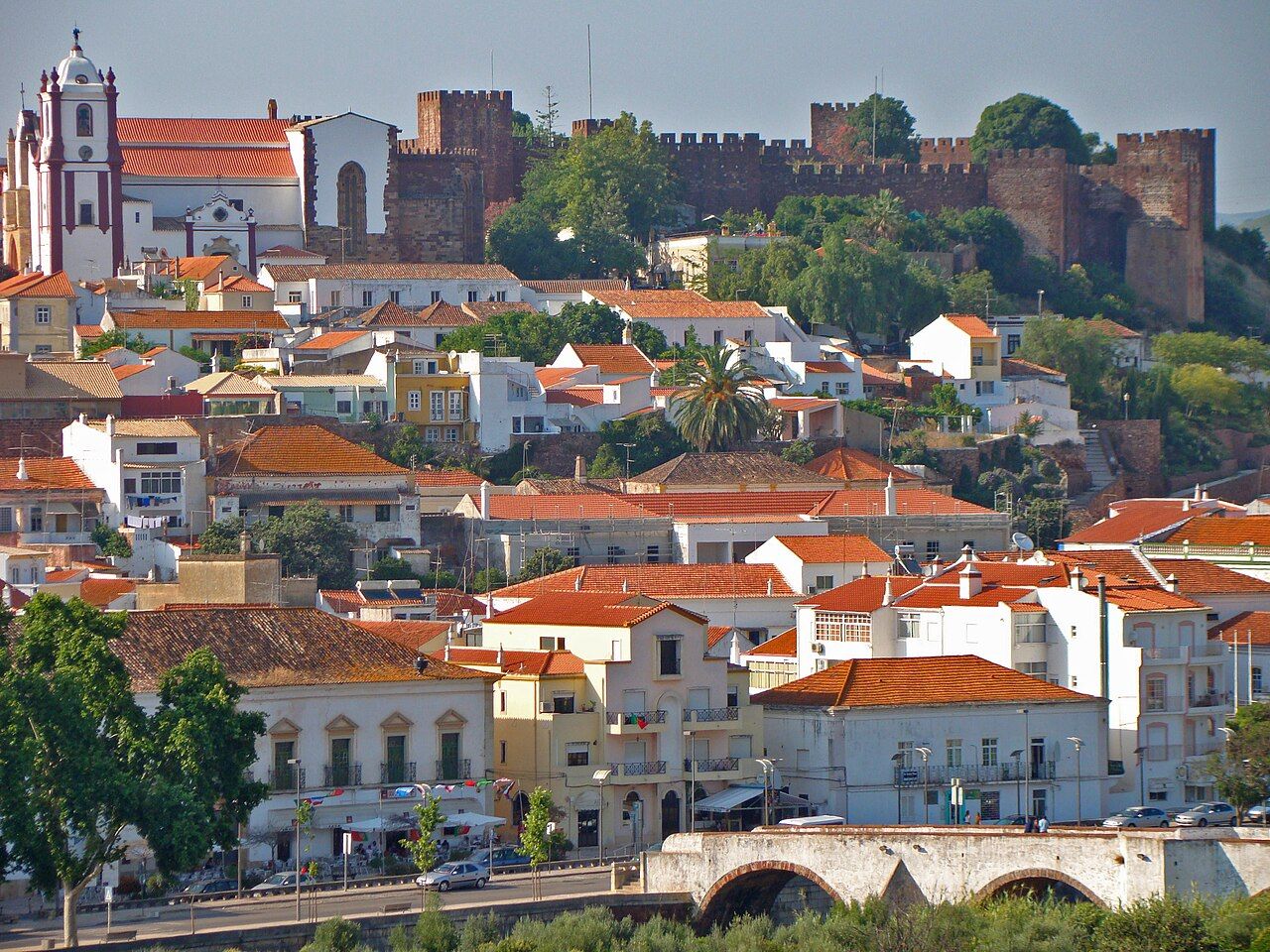
Silves is one of those places where the air carries the scent of orange blossom and echoes of a Moorish past. Nestled inland from the busy Algarvian coast, this small city wears its history with pride. Once the bustling Moorish capital of al-Gharb al-Andalus, today it’s a place of great warmth.
A city of red stone
Approaching Silves, you first see it rise from the landscape like an ember glowing against green citrus groves. Its fortress dominates the skyline as a vast, red citadel built from the local red sandstone, which makes it glow like fire at sunset. The castle of Silves is the best-preserved Moorish fortification in Portugal. As you walk its ramparts, the view unfurls across the Arade River valley, which yields a panorama of orange groves, tiled rooftops and distant hills.
The Moors called the city Xelb. During their rule, between the 8th and 12th centuries, it was a hub of learning and science. Traders from across the Islamic world and beyond passed through its port on the Arade River, bringing silk, spices and new ideas. It was said that Silves rivalled Lisbon and Córdoba for its sophistication. The poets of al-Andalus wrote of its beauty, speaking of gardens perfumed with jasmine and ornate palaces built of cooling marble. Back in those days, the river Arade was navigable, as it shimmered in the glorious Algarvian sunshine.
Today, that river runs quieter and is no longer navigable, but the spirit of Silves still carries a certain grandeur. Walk its cobbled streets and you can sense it in the surroundings; a lingering whisper of past glories.
Streets filled with tales
Silves is a town best discovered on foot. The narrow lanes climb steeply towards the castle, winding past whitewashed houses with ochre trim and doors painted in every shade of the sea. Bougainvillea drapes itself lazily over walls and the clink of glasses from a café terrace mingles with the general hullabaloo of daily life. There is no rush here, no impatience.
The Sé Cathedral, built on the site of a former mosque, stands in solemn stone beside the fortress. Its cool interior is an ode to Gothic austerity, but outside, children play in the square and a man with a straw hat sells fresh oranges from a wooden cart. These fleeting moments personify the simple rhythms of daily living and add up to make Silves special.
Downhill, by the old city walls, lies the Museu Municipal de Arqueologia, where the town’s layers of history are revealed through artifacts unearthed from beneath its streets. Roman relics, Moorish ceramics, and medieval coins are all pieces of a story that spans millennia.
The past and the present
While Silves wears its history proudly, it’s no museum. The city lives and breathes. Farmers’ markets fill the lower town with chatter and colour. On Saturdays, locals arrive with baskets of figs, almonds and honey to sell. The smell of roasting frango piri-piri wafts from roadside stalls.
The rhythm of Silves is distinctly Portuguese. It’s unhurried, generous and bound to the land. The surrounding countryside is among the most fertile in the Algarve, producing the oranges that have made the region so famous. In spring, the groves are a sea of blossoms and the air is heavy with perfume. In autumn, the harvest begins and the hillsides echo with the chatter and laughter of workers collecting the fruit by hand.
Beyond the orchards, vineyards stretch across the undulating terrain, producing increasingly respected Algarvian wines. The nearby Quinta do Francês, for example, offers tastings of bold reds and crisp rosés that capture the essence of the region’s terroir.
The castle and the river
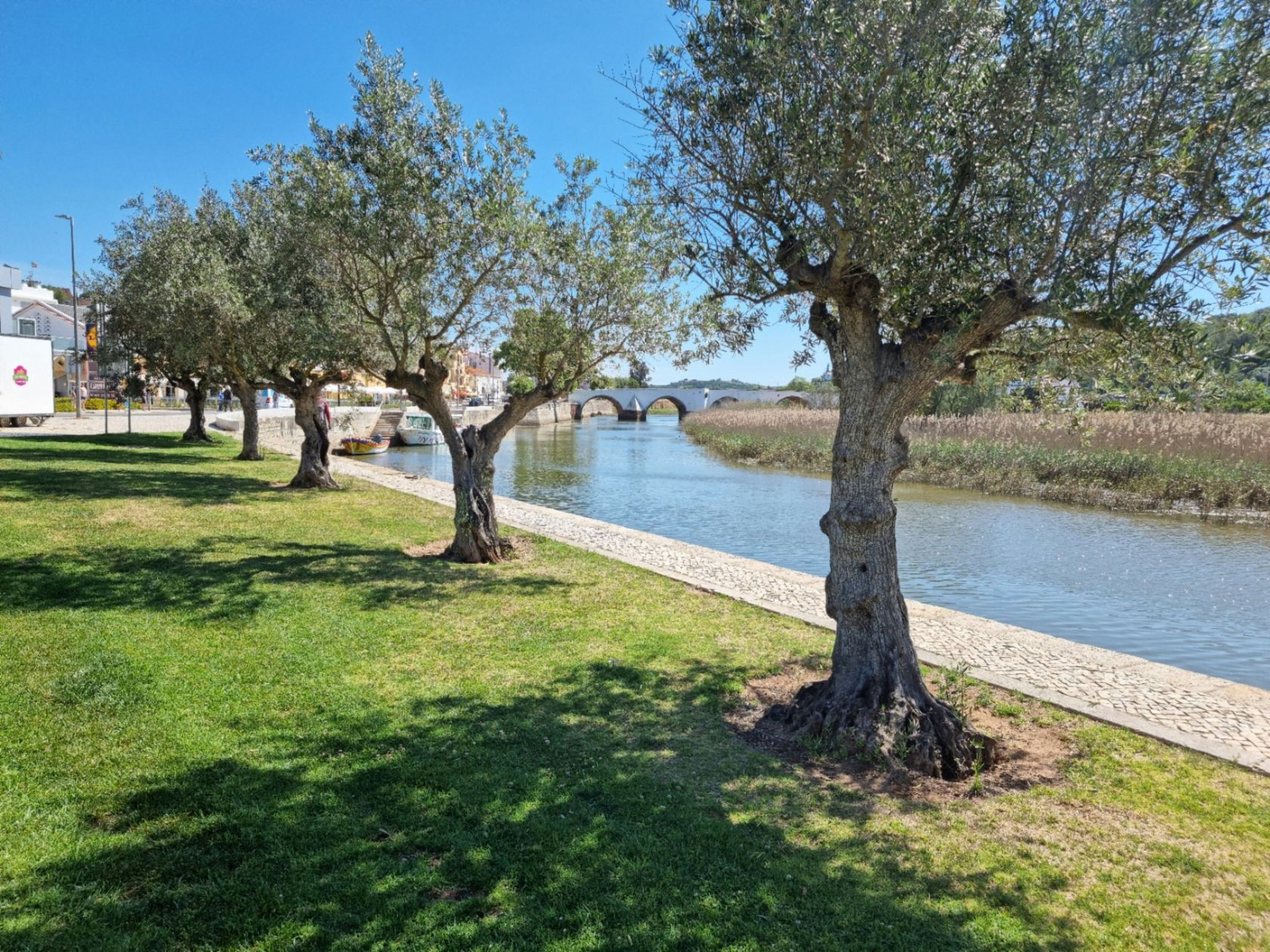
At the heart of Silves lies the interplay between the castle above and the Arade River below. The Arade River was once navigable all the way to the Atlantic, providing an artery that connected Silves to the outside world. In Moorish times, ships laden with goods from Africa and the Orient would dock here, transforming this inland city into a cosmopolitan port. Today, small boats drift gently on its surface, their reflections shimmering beneath the old whitewashed Roman bridge.
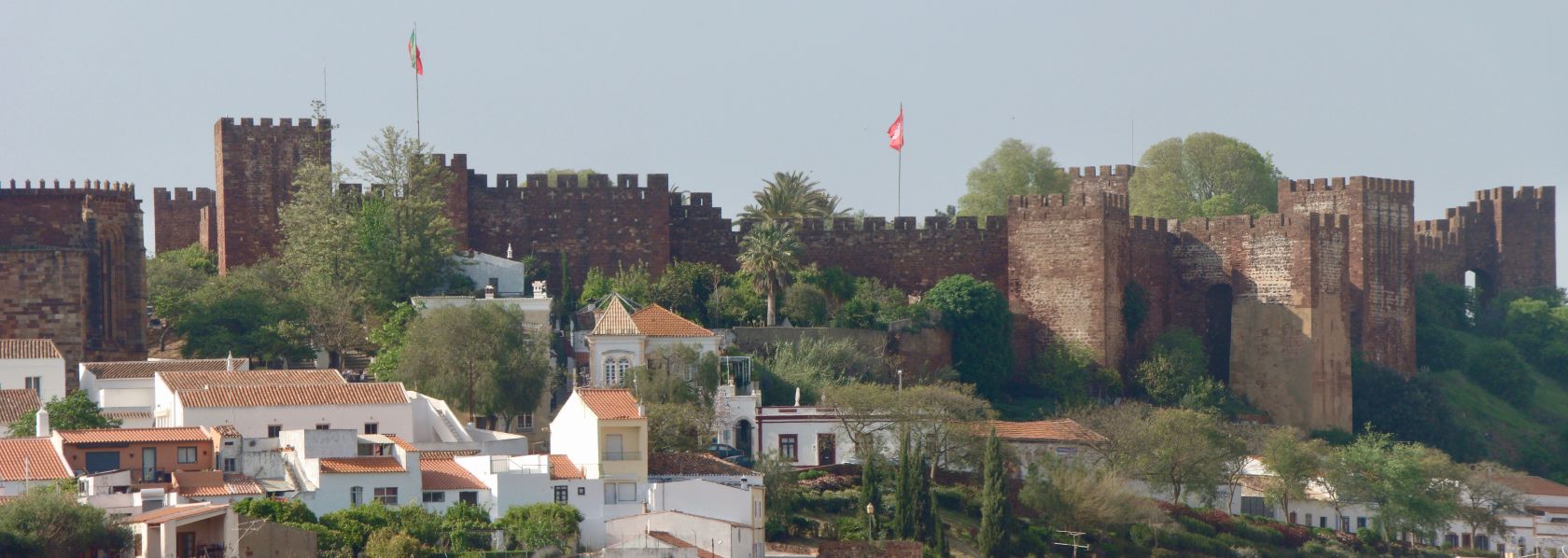
Sit on the riverbank with a glass of local wine at sunset and you’ll see the castle blush in the dying light. The red walls seem to absorb the glow, as if remembering the fires of long-ago battles and celebrations. It is one of the Algarve’s most stirring sights; a harmony of history, memory and renewal.
The festival of the Moors and the Christians
Each August, Silves steps firmly back into its past during the Medieval Fair, a week-long celebration that transforms the town into a scene from a thousand years ago. Knights on horseback parade through the streets, falconers display their birds and merchants in robes sell spices, metalwork and cloth. The atmosphere fills with music and the smell of roasting lamb whilst lanterns flicker against the stone walls. It is both theatrical and sincere, a tangible reminder that Silves was once the stage of empires, a crossroads of faiths and cultures.
Beyond the walls
The beauty of Silves is not confined to its walls. Beyond the city lies a landscape that seems untouched by the rush of modern tourism. Drive out towards São Bartolomeu de Messines and you’ll soon enter a world of rolling hills, cork oak forests and quiet hamlets. In spring, the countryside explodes into colour with lavender, poppies and wild thyme carpeting the fields. Cyclists and hikers follow trails along the river or up into the Serra de Monchique, whose peaks rise in the distance.
The Algarve’s famous beaches are only half an hour away, yet Silves feels worlds apart. Here, you trade the surf and bustle for something much deeper. A connection to the soul of the region, to the enduring rhythm of its land and its people.
A city of warmth and light
As evening falls, Silves softens. The streets grow quiet as the heat of the day fades. Locals gather at small taverns where barbecued food is served with rustic bread and wine. The air is filled with conversation, and occasionally you might even hear the melancholic sound of Fado.
The light lingers long on the red castle walls and then it slips gently away, leaving the city wrapped in a violet hue. It is in this lingering twilight that Silves reveals its truest character. It’s neither ancient nor modern, but timeless. A place where the weight of history is balanced by the pulse of daily life.
Silves is not the Algarve of postcards or beach resorts. It is something altogether rarer. It’s a place of substance and stillness where the past has not been erased but absorbed. To walk the streets of Silves is to walk through centuries. To linger there is to begin to understand something essential about Portugal itself.
And as you leave, looking back at the red castle glowing softly against the dusk, you may feel, as many have done before, that Silves is more than just a town. It really is the ancient heart of the Algarve.








 English
 Nederlands
 Deutsch
 Français
 Español
 Italiano
 Svenska
 Pусский
 中文
中文 Türkçe
 Português
 Polski
 عربي
عربي Suomi
Suomi עִברִית
 Português (Brasil)