

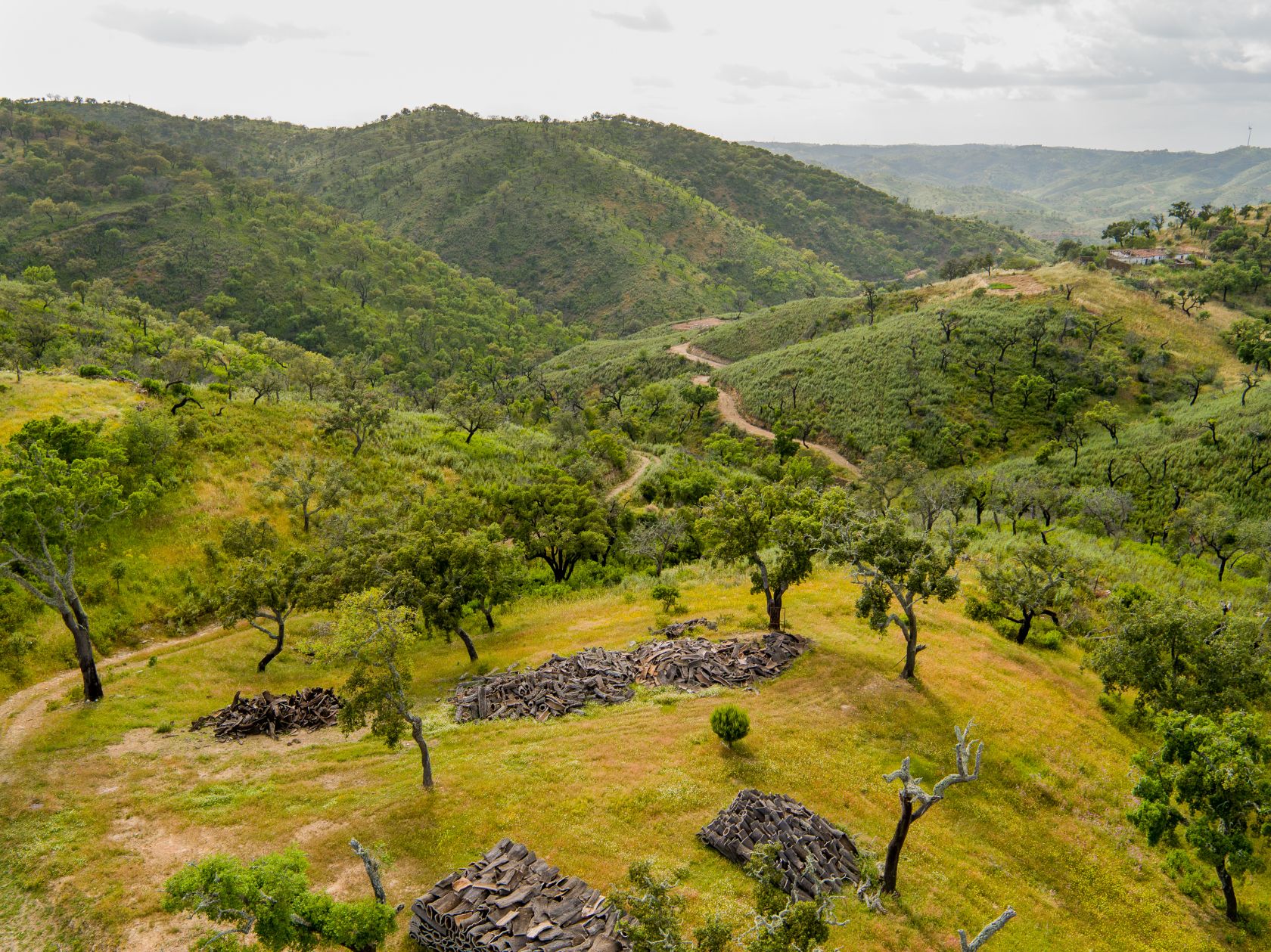
The data is from 2023 and shows that Portugal recorded the highest forest growth in the European Union (11.1%), ahead of Denmark (7.6%) and Ireland (6.8%).
On the other hand, according to data published by Eurostat, Malta showed no growth, while Cyprus recorded the lowest growth (1.6%), followed by Estonia and Bulgaria (both with 1.8%).
Compared to 2022, 17 countries recorded increases in this indicator, with Ireland (+3.6%), Denmark (+3.2%), and Cyprus (+1.6%) showing the highest growth rates. Instead, several countries recorded declines, including Lithuania (-1.8%), the Czech Republic (-1.7%), and Estonia (-0.6%).
“Forest growth plays a key role in the EU’s efforts to ensure sustainable forest management, support the bio economy and achieve climate goals,” reads the publication from the statistics office, noting that “forest growth varies considerably between EU countries, depending mainly on tree species and the age of forest stands.”
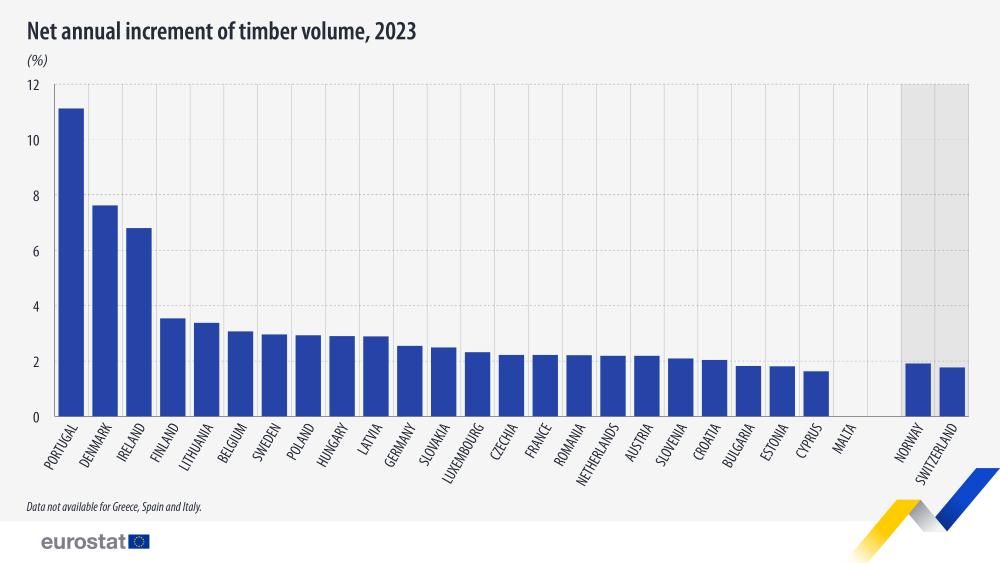
Portuguese forests occupy more than a third of the national territory, four times what it was in the 19th century. In the report “ECOFOR.PT – Economic Valuation of Goods and Services of Portuguese Forest Ecosystems”, five researchers from the Catholic University, the University of Trás-os-Montes and Alto Douro (UTAD), and Forestis – the Portuguese Forestry Association – estimated that the economic value of the Portuguese forest was approximately €2.24 billion in 2019, at 2016 prices — which today translates to more than €2.6 billion, according to ECO calculations.
Aware that the Portuguese forest is a valuable asset, Parliament approved the Forest Plan 2050 presented by the government in September. Based on four strategic pillars – valorization, resilience, ownership, and governance – the ‘Forest 2050, Greener Future’ (Forest 2050) plan foresees 61 short-term actions by 2025 and 88 medium-term initiatives between 2028 and 2050.
“About 36% of our territory is forest. Forest and scrubland make up 69% of the territory. A country that doesn't take care of this isn't taking care of itself,” emphasised Prime Minister Luís Montenegro at the ceremony presenting the Forest Intervention Plan until 2050, which foresees an investment of approximately 6.4 billion euros.






 English
 Nederlands
 Deutsch
 Français
 Español
 Italiano
 Svenska
 Pусский
 中文
中文 Türkçe
 Português
 Polski
 عربي
عربي Suomi
Suomi עִברִית
 Português (Brasil)
Sounds good, but the devil is in the detail. How much of the 36% is invasive and ecologically damaging eucalyptus?
By Felix from UK on 21 Dec 2025, 10:41
Let's not forget that most of the so-called Portuguese forest is made up by pinus or eucalyptus trees both at the heart of the paper industry! At the same time, the traditional cover by the so-called Mediterranean forest cork trees in the centre/south, pinus pinaster Lineu and other oaks have seen their area drastically reduced!
By A L Fernandes from Other on 21 Dec 2025, 11:15
I'm not surprised, having seen some of the most amazing cork farms and delighting in their sustainable system, for the most part. It's amazing how Portugal manages to do what many of its neighbors are not doing. I don't know what it is about Portugal. It is unique, magical, and enchanting.
By Nicolas from USA on 21 Dec 2025, 15:25
There my be an increase in forest areas, but...
1. Is it foreign trees being planted or indigenous sustainable planting?
2. Are the landowners assuming their silvicultural and legal responsibilities?
If the answer to the above is no. then more forest will mean more burning.
By Mozlucas from Beiras on 21 Dec 2025, 20:43
That sounds great, but I wonder how much of all this forest is actually eucalyptus, which is worse than useless for the environment?
By Mark from Porto on 22 Dec 2025, 15:06