


Their safety is initially assessed during clinical development. However, clinical trials have some limitations and may not be able to detect some adverse drug reactions. Once a medicine is in widespread use, information from real-world data helps to build a more complete understanding of its safety profile.
If you suspect that you’ve experienced an undesirable reaction (also known as an Adverse Drug Reaction) caused by a medicinal product, it’s important and altruistic to report it. By doing so, you’ll contribute to a better understanding of the safety profile of medicines and help make them safer for everyone.
In Portugal, the Portal RAM is the preferred channel for reporting Adverse Drug Reactions. However, those living in the Algarve or Baixo Alentejo may also report to the contacts below: • ufalba@abcmedicalg.pt • +351 912 926 965
For residents in other regions of Portugal, additional reporting contacts can be found here: https://www.infarmed.pt/web/ infarmed/entidades/medicamentos- usohumano/farmacovigilancia/ sistema-de-farmacovigilancia
All personal data communicated are kept secure and confidential, and they are not shared outside « the National Pharmacovigilance System (INFARMED – Natioal Authority of Medicines and Health Products, I.P. and Regional Pharmacovigilance Units).
The importance of pharmacovigilance for public health
The World Health Organization (WHO) defines pharmacovigilance as the science and activities related to identifying, assessing, understanding, and preventing side effects or other problems caused by medicines and vaccines.1
Pharmacovigilance helps to ensure that medicines remain safe for public use. This involves continuously monitoring medicines to detect possible safety issues and taking action when risks are identified. This process is essential for protecting patients and promoting the safe and effective use of medicines.
Research shows that about 5% of hospital admissions in the European Union are due to adverse drug reactions, which are unwanted or harmful effects related to medicines. These reactions are one of the leading causes of death in hospitals, resulting in approximately 197,000 deaths each year and an estimated annual cost of €79 billion to European healthcare systems.2
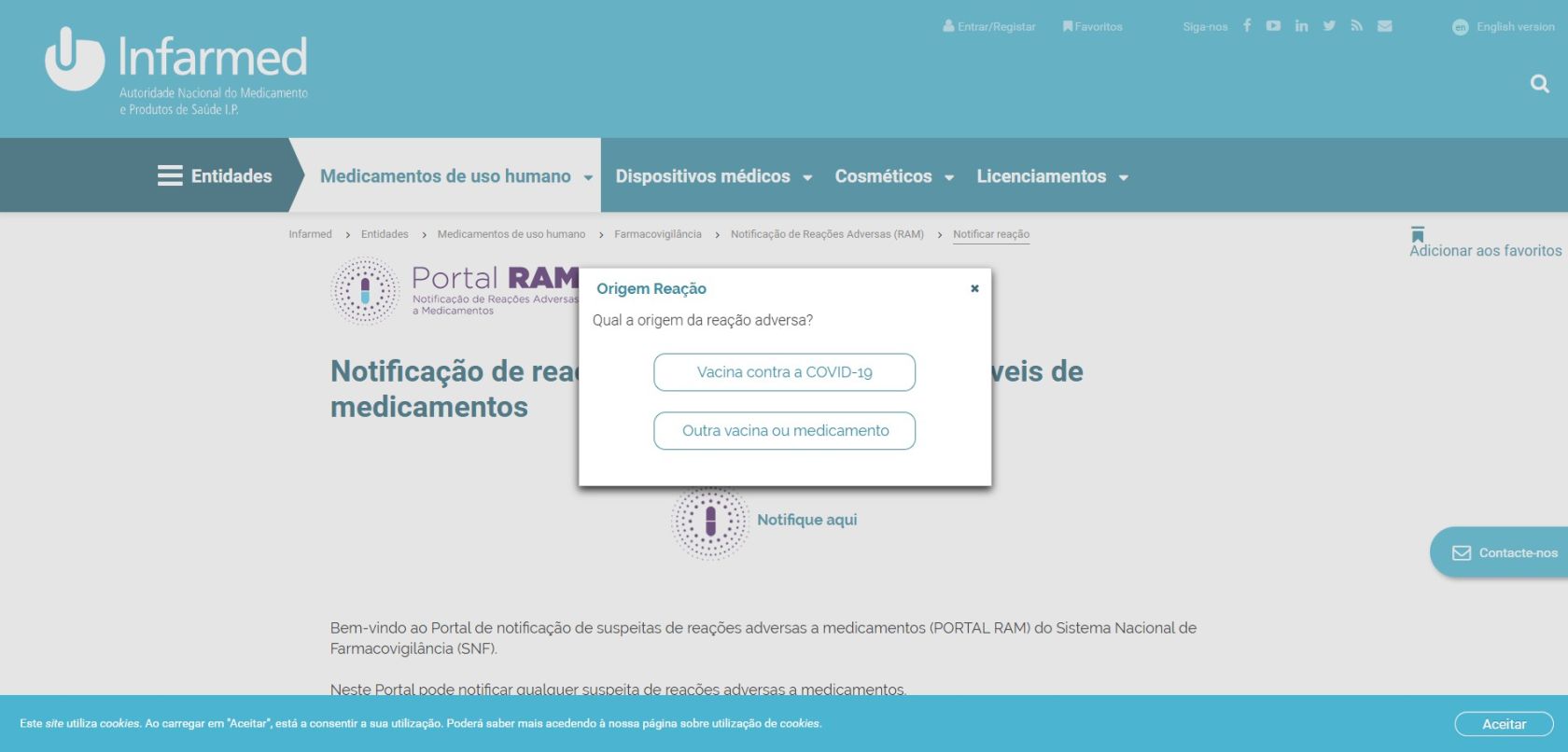
Once a medicine is available on the market, pharmacovigilance largely depends on suspected adverse drug reactions reports from healthcare professionals and patients. In Portugal, these reports are mainly submitted online through the Portal RAM in the website (www.infarmed.pt) of INFARMED – National Authority for Medicines and Health Products, I.P.
Additional activities
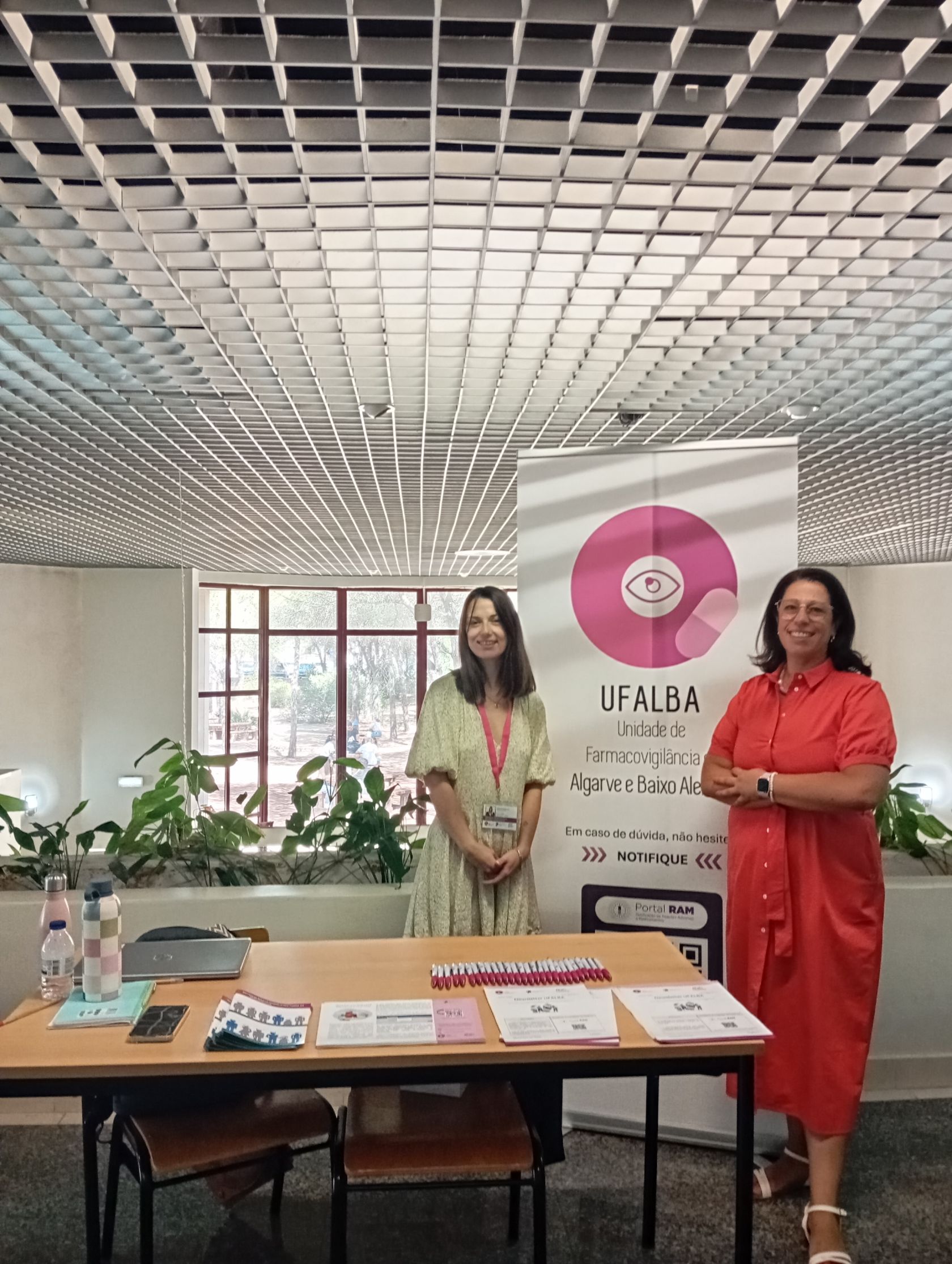
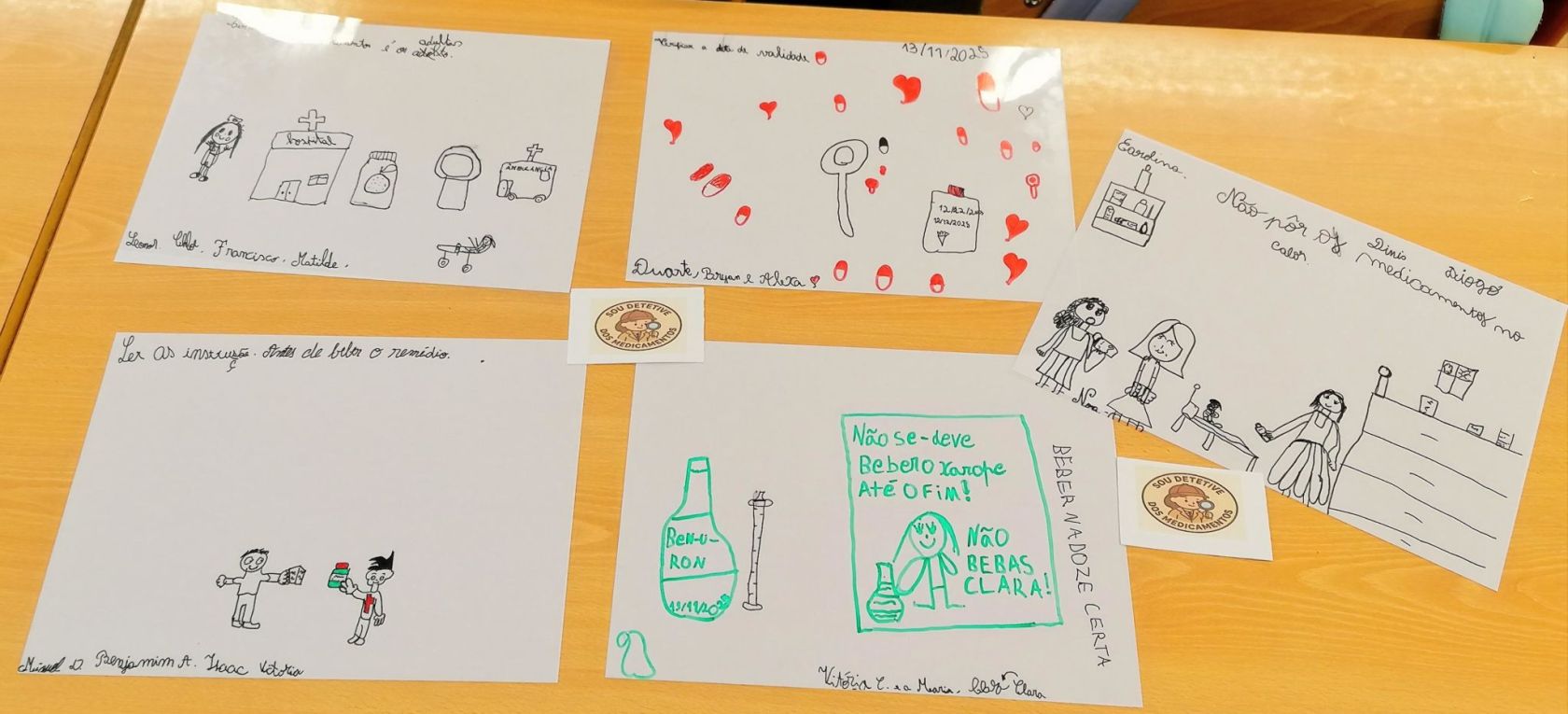
One of UFALBA's additional activities is organizing community events to promote the importance of pharmacovigilance to public health. In 2025, for example, we held events at the MAR Shopping Centre, in primary schools, and at the University of Algarve, reaching a diverse range of people.
Your commitment on reporting suspected adverse reactions is crucial for enhancing the safety of medications for everyone. Thank you for helping to make medicines safer!
References
1 - https://www.who.int/teams/ regulation-prequalification/regulation- andsafety/pharmacovigilance 2 - https://ec.europa.eu/commission/ presscorner/detail/de/ memo_08_782






 English
 Nederlands
 Deutsch
 Français
 Español
 Italiano
 Svenska
 Pусский
 中文
中文 Türkçe
 Português
 Polski
 عربي
عربي Suomi
Suomi עִברִית
 Português (Brasil)