

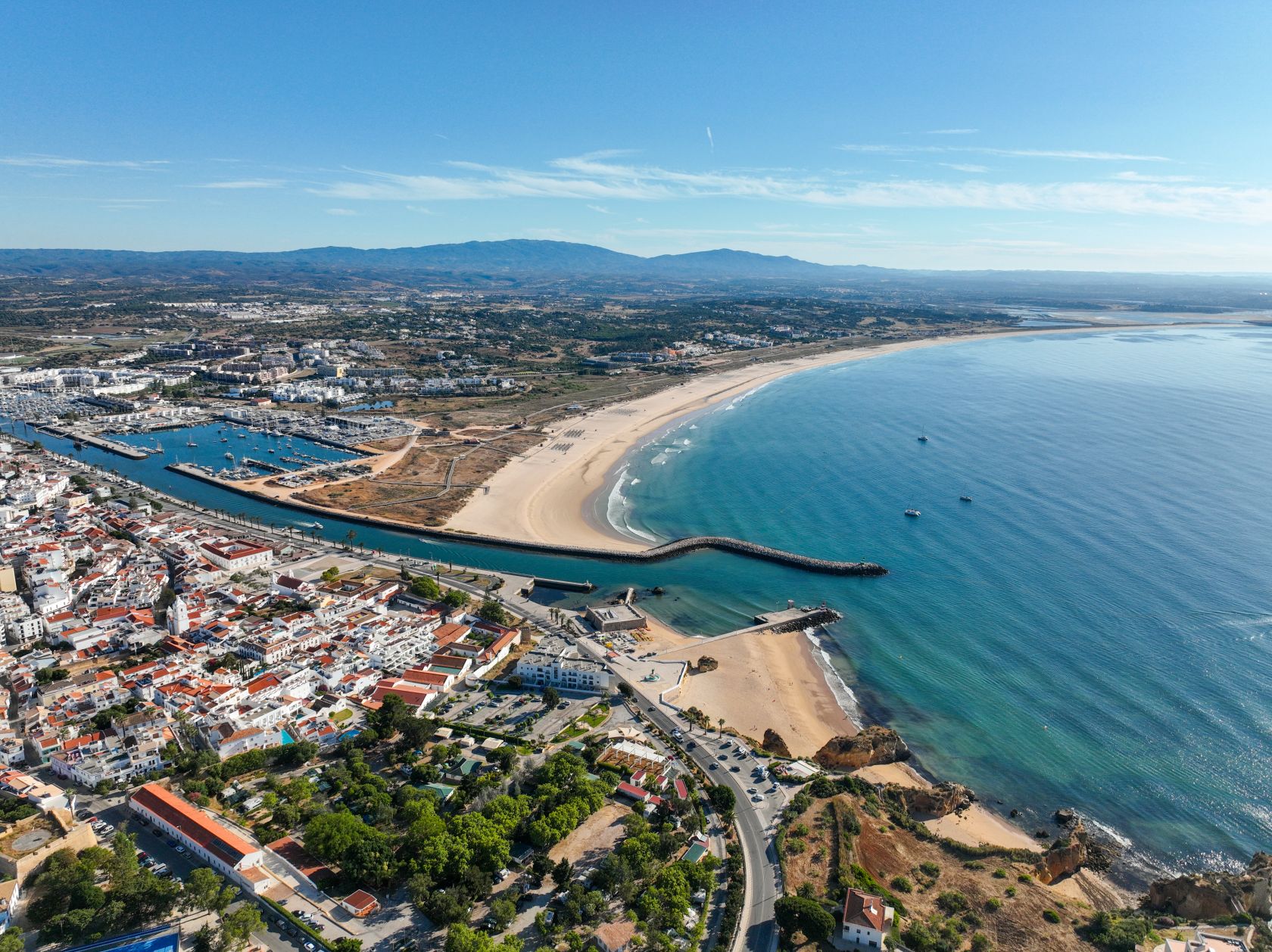
The new infrastructure is intended for vessels up to 30 meters in length and also offers 55 berths for professional fishing, 170 berths for local nautical recreation, and 41 berths for the Lagos Sailing Club.
To the current 474 berths for yachts, 102 mooring berths for vessels from 10 to 30 meters will be added in the Lagos outer harbour.
In statements to the Lusa news agency, the administrator of the Lagos Marina, Martinho Fortunato, explained that the inclusion of pontoons for fishing in the project "is a counterpart to the project and the negotiation with Docapesca, because the intervention area encompasses the fishing port."
Speaking on the sidelines of the ceremony marking the start of construction, the administrator of the Lagos Marina said that the 170-berth pontoon is intended for "small boats belonging to local people, with lower costs, to give everyone access to enjoy the sea."
According to the official, the project "will allow the requalification of an abandoned area of the city, because in addition to the water surface, the intervention extends to the adjacent spaces."
"We will also create fishing gear warehouses, 135 parking spaces, a Yacht Club [event and activity centre related to nautical activities] and eight commercial spaces," he emphasised.
Martinho Fortunato estimates that the expansion work on the water surface could be completed next September, and that the surrounding areas could be completed in 2027.
The official predicts that the new infrastructure "will represent a 21% increase in economic impact," adding that the annual turnover of the Lagos Marina is between €17 and €30 million.
The director of the Lagos Marina highlighted the project's importance to the country's economy, which currently houses 106 companies that generate 1,350 jobs.
In turn, the president of the Algarve Tourism Region (RTA), André Gomes, told Lusa that "the project is important for Algarve nautical tourism, a segment with enormous growth potential."
"With this investment in improving the offer for nautical tourism, quality and innovation are added to an important and strategic segment for the RTA," he concluded.






 English
 Nederlands
 Deutsch
 Français
 Español
 Italiano
 Svenska
 Pусский
 中文
中文 Türkçe
 Português
 Polski
 عربي
عربي Suomi
Suomi עִברִית
 Português (Brasil)