

At the same time, the Municipality of Mértola reports that Spain’s Chança Dam is also discharging continuously, a situation that may lead to higher water levels and stronger flows in the Guadiana River downstream.
Local authorities explain that water released from the Pedrógão Dam takes around 18 hours to reach Pulo do Lobo. As a result, any noticeable rise in the river’s flow in Mértola is expected to occur only after that period.
Given these conditions, a gradual increase in the Guadiana River’s flow is anticipated, with more noticeable effects likely throughout today, Thursday, according to the Mértola City Council.
It is recommended that people "avoid staying or circulating in riverside areas, riverbanks and areas usually subject to flooding," "not cross submerged areas, fords or paths near the riverbed," "pay extra attention to agricultural, livestock or leisure activities near the Guadiana River and strictly comply with the instructions of the authorities and civil protection services."
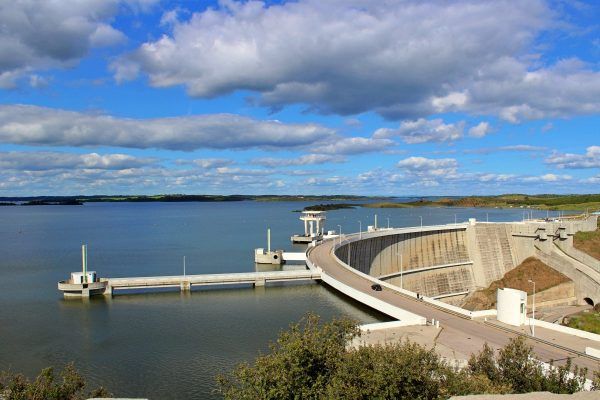
In a statement, the Alqueva Development and Infrastructure Company (EDIA) announced that at 4 pm on Wednesday, it would "open the mid-bottom spillways of the dam" for "controlled discharges."
This operation aims to respond to “the persistence of high inflow rates in the Alqueva-Pedrógão System, which have raised the reservoir levels to values close to the Full Storage Level,” the company explained.
The water from the Alqueva discharges will flow to the Pedrógão Dam, which is also part of this multipurpose project and has been discharging into the Guadiana River since the 21st of this month.
“The flow discharged into the Pedrógão Dam will be in the order of 1500 m³/s,” revealed the management company of the Alqueva Multipurpose Project (EFMA).
According to the company, “storage in Alqueva had been managed primarily through the operation of hydroelectric plants, allowing for the regulation of volumes and ensuring energy production.”
In parallel, it explained, “the Pedrógão Dam, located 23 kilometres downstream, carried out discharges that contributed to the management of inflows.”
“However, given the persistence of high inflows, it became necessary to complement this operation with controlled discharges also in Alqueva, guaranteeing the maintenance of the operational safety margins of the reservoir,” it justified.
The water releases that started today at Alqueva are expected to increase the level and flow of the Guadiana River downstream of the Alqueva and Pedrógão dams. “This situation is being closely monitored by EDIA in coordination with the relevant authorities,” the statement says.
The Alqueva reservoir has a maximum level of 152 meters and can hold up to 4,150 cubic hectometres of water.






 English
 Nederlands
 Deutsch
 Français
 Español
 Italiano
 Svenska
 Pусский
 中文
中文 Türkçe
 Português
 Polski
 عربي
عربي Suomi
Suomi עִברִית
 Português (Brasil)