

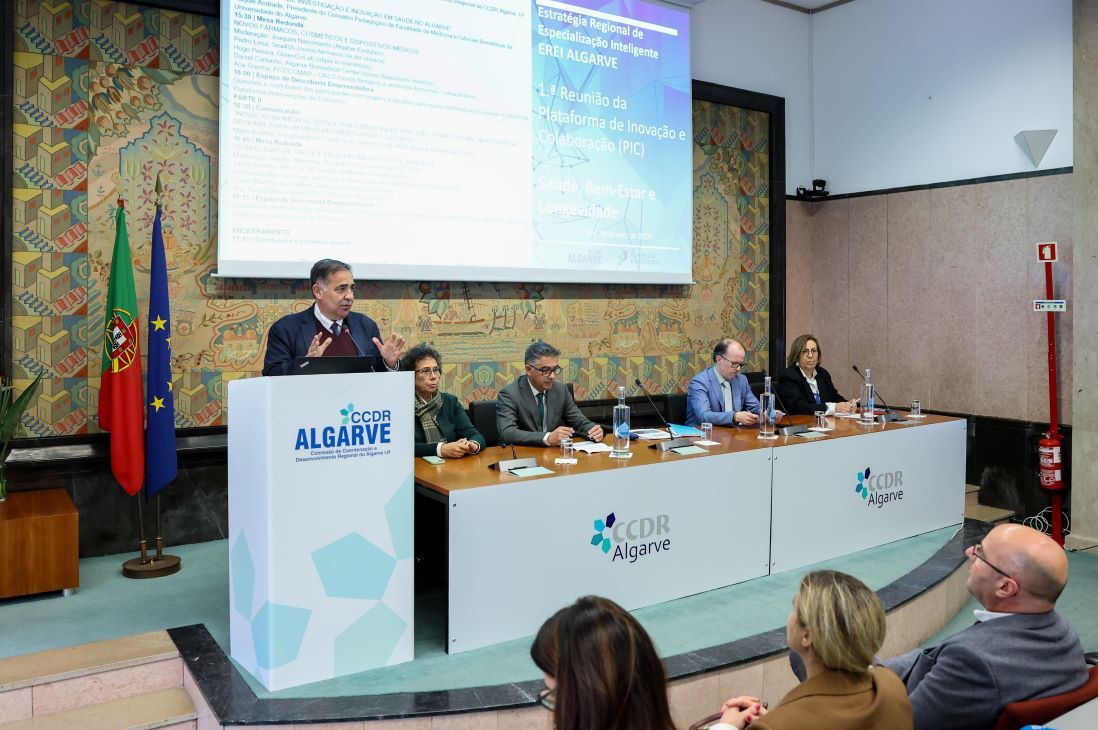
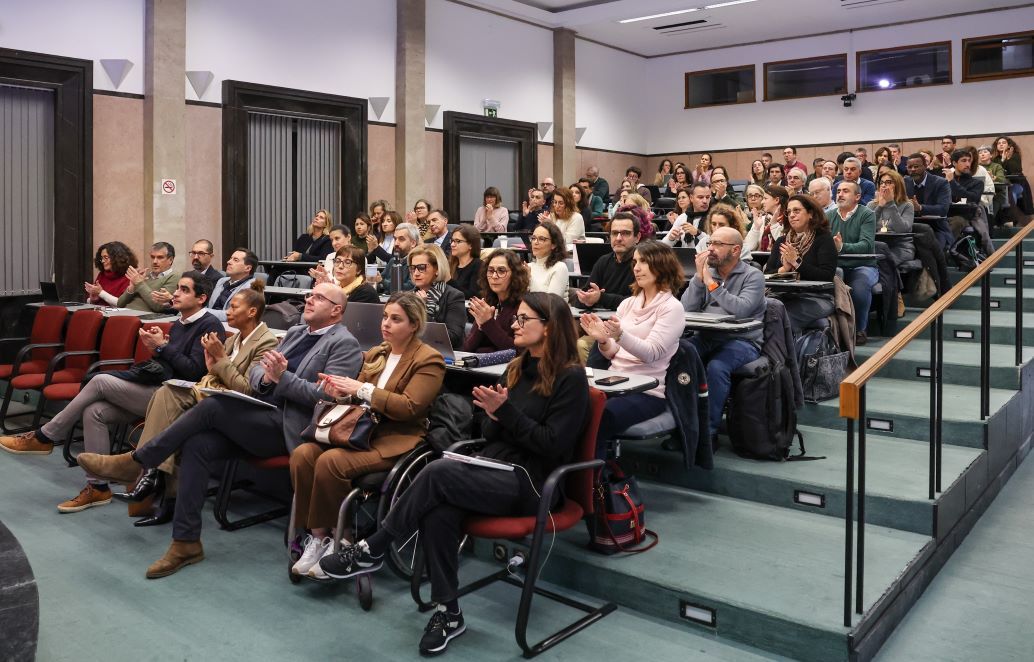
The initiative brought together more than 80 participants from the regional ecosystem, including universities, companies, public administration, and civil society, for a meeting to share knowledge, experiences, and opportunities for collaboration.
In the opening session, CCDR Algarve president José Apolinário emphasised the role of these platforms in facilitating communication among regional agents, highlighting the importance of knowledge transfer and building critical mass in these areas. He also stressed that, as the managing entity of the Algarve 2030 Regional Programme, the CCDR seeks to adjust support instruments and influence public policies based on the results of these partnerships.
José Apolinário also highlighted the need to reinforce investment in research and development, currently below the national average, referring to the priority given, within the framework of the Algarve 2030 reprogramming, to the STEP Strategy – Strategic Technologies for Europe, focusing on digital, clean, and efficient technologies and biotechnology. A call for proposals is expected to be published, targeting knowledge-transfer projects with practical applications of R&D.
Also at the opening, the Vice-Rector of the University of Algarve, Pedro Castelo Branco, highlighted the institution's involvement in health and longevity, both through support for company creation and through participation in collaborative laboratories, namely the Algarve Biomedical Centre (ABC).
The complexity of the National Health Service in the region was another highlighted topic, with the president of the Board of Directors of the Algarve Local Health Unit, Tiago Botelho, referring to the challenges associated with modernization, attracting funding, and developing innovation projects, in conjunction with ABC, particularly in the areas of digitalization, clinical decision-making, and monitoring the health of the senior population.
The framework of the Algarve 2030 Strategic Plan was presented by Maria de Lurdes Carvalho, director of the Planning and Regional Development Unit of the CCDR Algarve, followed by a presentation by Raquel Andrade, associate professor at the Faculty of Medicine and Biomedical Sciences of the University of Algarve. Partnerships between academia and healthcare providers were highlighted, as were strategic infrastructure initiatives, including the Clinical Simulation Centre and the ABC Research Institute, the only R&D centre in biomedicine south of the Tagus River.
In the second part of the meeting, Marta Botelho, from the Association for the Development of the Algarve Biomedical Centre, presented ABC's contribution to the regional strategy for active and healthy ageing, addressing ongoing projects, areas of intervention, and future challenges, focusing on prevention, collaborative innovation, and citizen involvement.
The program also included roundtables and entrepreneurial discovery spaces to promote project identification and collaboration opportunities. At the closing, Aquiles Marreiros, an executive member of the Algarve 2030 Regional Program, framed the presented ideas within the available funding instruments, while Lurdes Carvalho invited proposals for entrepreneurial discovery spaces to be developed in conjunction with the CCDR Algarve.






 English
 Nederlands
 Deutsch
 Français
 Español
 Italiano
 Svenska
 Pусский
 中文
中文 Türkçe
 Português
 Polski
 عربي
عربي Suomi
Suomi עִברִית
 Português (Brasil)