

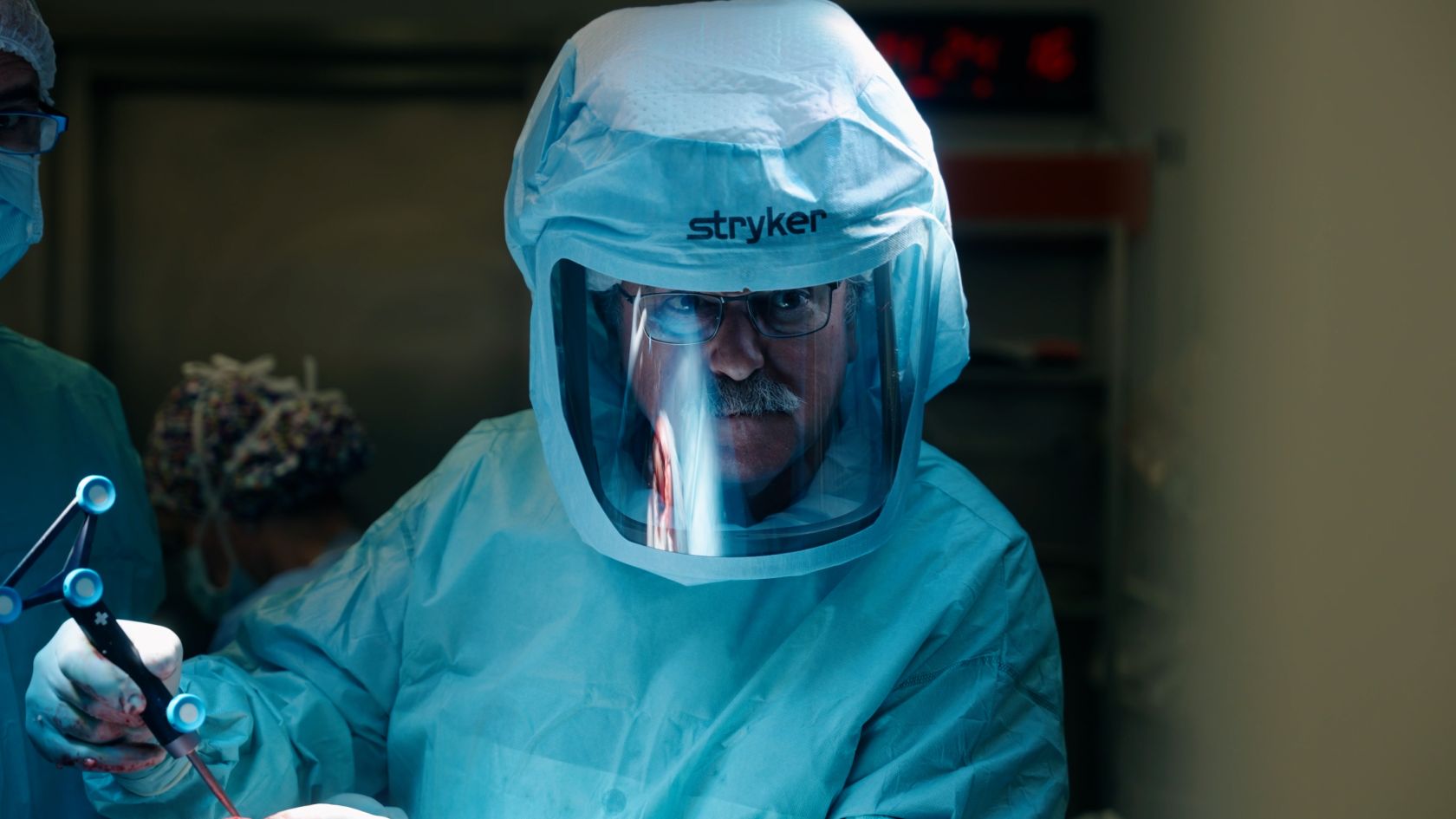
He graduated in Medicine from the Faculty of Medical Sciences of the Universidade Nova de Lisboa. In 1988, his goal was to settle in Lisbon, but for various reasons, he ended up moving to the Algarve, a decision he does not regret.
In 2013, together with Dr Henrique Cruz, he created the Orthopaedic Service at the Hospital Particular do Algarve, which aims to provide a structured collegiate service for training.
Since its creation, the HPA Orthopaedics Group now has 10 orthopaedic surgeons and performs more than 2,400 surgeries and 16,000 consultations per year, according to data released in 2024. In addition, 20 scientific articles have already been published internationally.
At present, the hospital offers consultations for all subspecialties except paediatric orthopaedics.
The Portugal News (TPN): In terms of orthopaedics, what are the problems that most affect the knees?
João Paulo Sousa (JPS): There are basically two areas: sports medicine, where ligament and meniscus injuries predominate, and reconstructive medicine, which deals with degenerative pathology (osteoarthritis). I don't work in the first area; other colleagues do that excellently. I mainly work in the second area, where the solution involves arthroplasty, in this case of the knee, commonly known as knee replacement (KR).
In the field of knee arthroplasty, we have always evolved based on constant data collection that evaluates and monitors our results and options almost immediately. We have a database, created with our patients, which already has more than 1,100 cases, with more than 220,000 data points, where functional results and patient satisfaction are systematically recorded. We want all our patients to be assessed from a functional point of view before and at various stages after surgery so that we can clinically monitor each case and our decisions as a whole.
This database has been the source of numerous communications, publications and master's theses in close collaboration with the University of the Algarve.
PJ is indicated for patients whose joints have lost cartilage, the structure that allows movement between bones to be carried out with minimal friction and without pain, leading to pain, stiffness, crepitus and joint deformity. When conservative measures, such as joint treatment, weight loss, physiotherapy, oral medication and intra-articular injections fail, and pain and disability have a major impact on the patient's daily activities, PJ is indicated.
The surgery consists of implanting three or four elements: a femoral component made of metal, chromium cobalt or Oxinium; a tibial component made of titanium; a plastic (polyethylene) component fixed to the tibial component, which allows movement with minimal wear between these two elements; and, in some cases, an element in the patella.
TPN: What is robotic knee surgery?
JPS: We call the system that helps us decide the size and location of these implants in order to achieve the best possible result “instrumentation”. This decision on size and, in particular, location and orientation, is crucial to the final functional and clinical outcome. There are three types of instrumentation: classic (CI), which we used until 2011 and which is used in the vast majority of hospitals, where a series of instruments assist us during surgery, in a somewhat imprecise and limited way; patient-specific instrumentation (PSI), where, based on an MRI and X-rays, a specific plan is made for each patient, by a group of engineers based in Switzerland. In our case, this plan is reviewed by the surgeon and, when approved, generates a cutting block (in the USA) that adapts precisely to the joint ends of the femur and tibia and guides the exact positioning of the implants. We were the first users of this system in Portugal in 2011, and we are the centre with the largest number of cases in the Iberian Peninsula. Finally, in April 2013, we began robotic instrumentation, where computer-assisted surgery creates a model similar to the patient's anatomy, taking into account the bone anatomy and the tensions of the capsuloligamentous envelope, in order to give the surgeon information for placing the implants in the most convenient way. Once this location has been decided, a robot performs the bone cuts. We performed the first robotic knee surgery in Portugal. We are the centre with the highest number of cases, around 150, and we are a training centre for several colleagues who have visited us for training with the aim of starting the technique in their centres.
TPN: In which cases is this surgical procedure performed?
JPS: At this stage, we use the three instrumentation techniques. The choice for each patient depends on the surgeon's preference and the patient's choice. For my patients, I adopt it as the basic choice for all patients.

TPN: How is recovery from this surgical procedure?
JPS: This procedure has a difficult and lengthy recovery, more difficult than its hip counterpart. The average length of hospital stay is slightly less than two days, a little shorter than for other procedures, whether conventional or PSI. It allows free weight-bearing on the operated limb, but the use of crutches is necessary, not to protect the implant, but to give the patient balance. Therefore, whether to use two, one or none is up to the patient, depending on their safety and stability. Usually, two in the first week and none between the second and fourth. Despite the pain, which is controlled medically, it is essential that the patient mobilises the joint as soon as possible, as the earlier this is done, the easier it is to regain mobility. In the functional assessment we perform on our patients, we find that after one month they are already better than before the operation, but maximum comfort is achieved after more than a year.
No surgery is without complications. The most feared complication in this procedure is infection, but we have an infection rate of less than 0.5%, which is on par with any world-class centre.
TPN: HPA was a pioneer in this surgical procedure. How many patients have undergone the surgery so far?
JPS: Finally, what is most important is patient satisfaction. We monitor patient satisfaction in real time using our database. The table below shows the satisfaction results of more than 850 cases surveyed, who were asked to rate their satisfaction on a scale of 1 to 10. We can see two things: the evolution of the instrumentation has been reflected in an improvement in satisfaction results; with robotic surgery, the satisfaction level is currently close to 9, which is excellent. Our rate of dissatisfied patients, rated below 6, is around 7%. This does not mean that they are worse off than before the surgery, but rather that they are not as well as they had hoped to be.
TPN: Is there any goal that has not been achieved in this regard?
JPS: Finally, a few words about an old goal that has not yet been achieved. The Algarve is currently the only region in the country where there are no training centres for orthopaedic interns; there are no centres with training qualifications for the orthopaedic specialty. The Algarve University Hospital Centre (CHUA) has lost it. This accreditation is granted by the Portuguese Medical Association. We already have partial accreditation for three-month internships, but we will continue to fight, because we believe we have had the conditions for this for a long time, to overcome all obstacles and give the region a training centre for orthopaedic surgeons once again.
For more information, please contact Grupo HPA Saude at (+351) 282 420 400.






 English
 Nederlands
 Deutsch
 Français
 Español
 Italiano
 Svenska
 Pусский
 中文
中文 Türkçe
 Português
 Polski
 عربي
عربي Suomi
Suomi עִברִית
 Português (Brasil)